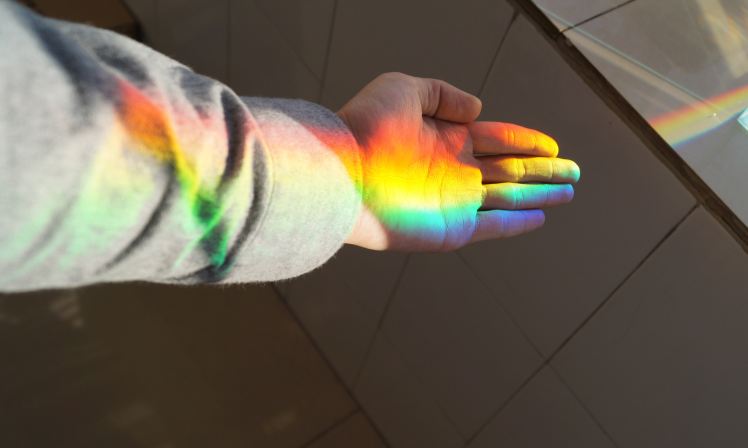
Today is National Coming Out Day. While I’ve been going through the “coming out process” for over a year now, yesterday (10/10/2019), I “officially” came out on Instagram for the first time. I shared that I am queer – a term that I use because it feels like it better encompasses my whole identity – and specifically, I am bisexual.
I opened up a forum for people to ask me questions about bisexuality and/or my identity. Here are the questions that folks asked, and my responses to them. These are by no means exhaustive answers, but rather my attempt at being concise and honest, speaking from my own experiences and understanding. I am extremely grateful to everyone who stepped out and asked me something, and all of the conversations that have been prompted through this process. The questions are listed in the order in which they were asked.
- What was your experience like coming out to family?
Coming out to my family was scary, and worth it. Coming out can be especially hard when you know that the people you love do not know or understand very much about what you’re about to tell them – a thing that is deeply true about yourself. Particularly for me, being bisexual and partnered with a man, my identity seems to confuse people a lot. They seem to think that I cannot be both bisexual and partnered with a man at the same time.
- Did you have a specific moment of realization about your identity?
I was just thinking and writing about this recently. I would say “yes”, even though that feels like an oversimplification of the process. Honestly, a tension that I continually hold is how to stay honest and transparent about my internal processes and journey, without superimposing late revelations on the past – as if I knew or understood more than I actually did, just because I know or understand those things now.
There was a moment that I first experienced a noticeable attraction to women, that I could name. There was a moment of realizing, with seriousness, that I am not straight. That moment was different from the moment when I finally found the right language to describe, most accurately, who I know myself to be. And there was a significant amount of time (and thinking, writing, reading, wondering, praying, etc.) between those two moments.
People tend to ask, “how long have you known?”, and while it’s hard to pinpoint any single moment when it awoke within me – the knowledge of the presence of this essence that has known me since the beginning of time – I remember “the moment” when I knew. Folks tend to call that moment “coming out to yourself”…when really, it works more like finding words that seem to fit well in an attempt to describe the indescribably unique ways that I experience the world.
- I want to understand your POV (point of view) of scripture, being a Queer Christian.
As a minister in training and a person of faith, this question has a special place in my heart.
It has been a process for me. First, I started out unsure that I could hold the Bible in an honoring and authentic way AND be LGBTQ+ affirming. I started by exposing myself to a lot of different points of view across the spectrum and spent a lot of time praying and discerning. My upbringing and my personal exposure to LGBTQ+ issues left me with mixed feelings about my own identity, as well as the importance of it, so I was genuinely seeking truth and not just an affirmation of my own position. Interestingly, I became LGBTQ+ affirming through the support of scripture and God’s expansive love before I came out to myself.
The first step for me in affirming LGBTQ+ in the context of scripture was learning more about the actual interpretation of the “clobber passages”, or those verses that are typically used by Christians to say that LGBTQ+ orientation and/or behavior is wrong/sinful. Once I learned the historical, linguistic, and cultural context of those passages instead of just taking people’s word for the fact that somehow, early century writers were able to speak to contemporary issues that they knew nothing about (hint: they cannot), I realized that I gained a more authentic and honoring perspective of scripture by not imposing the 21st century context and agenda into it (this is called “eisegesis”).
As I learned and read more, I also came to an understanding that the Bible is not inerrant or infallible. In other words, I do not believe the Bible is perfect (without error), and I do not believe it was written by God. I believe that the Bible is imperfect in nature because humans wrote it – though they were inspired by the Divine and their experiences with God, it was not God who wrote the Bible or willed every word to be in it.
Once I came to understand this, particularly through seminary and intense study of Biblical language, I have been able to experience scripture in all of its literary styles, flaws, glorious hope, and mystery in deeper ways…knowing that the God who I love and who continually draws me near to Them delights in my critical thought, questions, and exploration through the stories of faithful people in history.
I love the Bible. I always have! I have read it thoroughly and have a lot of it memorized. And honestly, I realized that by trying to take literally a book that was never meant to be taken literally (because it’s not ONE book, it is a collection of many many different kinds of stories, poems, literature, narrative, documents, etc.) and by treating the book itself as holy or on par with God, Jesus, and/or the Spirit caused a lot of problems with a question of “picking or choosing” and “where does that stop?”.
Once I stopped seeing the Bible as stagnant and stopped seeing it as perfect – I began to understand it as a “living document” in a different way. The way I read it and experience it might be different than you, because of who I am in the world. And that is okay! Just like if we both read a historical biography of an inspirational character like MLK Jr., we would experience it differently because of our own lenses, so it is with the Bible.
I believe that this very thing is one of the major points of Christian community and Bible study – that we might discuss and weave together a broad, expansive understanding of God’s love and character through how we each experience these stories (good, bad, and ugly). The image of God is reflected in each of us, but no one carries the whole of the image, and so we need one another!
There are some ways of reading and applying the text that are just wrong or inaccurate. There are unique wrong and inaccurate ways for every single part of the Bible, so I cannot really get into it here because it is not one unified fallacy. BUT, that is a lot of what I am learning in seminary, and why I am so passionate about educating others as I proceed through my journey of becoming a pastor, and in my future pastorate. I think that we can have real conversations where we all learn and ask questions.
I do not have all of the answers. But, honestly, there is not just ONE set of “right” answers about what the text might mean – this is what I mean when I say that the Bible is as “living document”. But, there are some WRONG answers to what the scripture means. To summarize those: they are interpretations of scripture that misrepresent the love, grace, power, and character of God. They are interpretations that read-into the text that which is not actually there but someone wants to find, for the sake of their own agenda, in the Bible because many see it to be authoritative (again, this practice is called “eisegesis”).
At the end of the day, I respect your faith and how you exist in relationship to scripture, and God. I might not relate to God or experience scripture in the same way as you, and I know that is okay. We do not have to be the exact same, in order to exist within the same never-ending love of the same God. I am glad if you are living your life to show God’s love and trying to be authentic to that – I am too. I truly believe it is a journey. I did not arrive at where I now am overnight.
- When did you open up about your sexuality, and what in seminary helped you with this theologically?
I first came out to someone else in February 2018, soon after I came out to myself but LONG after I knew that I am attracted to people of my own gender, as well as others. I came out to very few people between February 2018 and February 2019, except my community at seminary. Everyone there knew and was incredibly supportive!
Seminary, aside from being a supportive faith community full of people who have been journeying in their theology/faith in the context of being queer for far longer than I have, helped me in my biblical studies and relationship with God. I had a safe lace to study, ask questions, and be honest.
My favorite part of seminary so far, and something that I think has developed me a ton as a person of faith and as a minister, is being able to do projects, papers, and sermons that connect my queerness to Biblical studies and theology.
- Is it okay to have an identity that doesn’t currently have a title?
100%. Labels, identifiers, titles, etc. are only there to give us a language to describe our experiences. If there is not one or more title that fits you authentically, then make your own or do not use one at all! You are the expert on yourself. And, not having a titel or label does not make you any less a part of the community.
- What does it mean to be bisexual, and when did you begin to identify as bisexual?
Being bisexual means that you are attracted to both (bi) people of your own gender and people of other genders.
I started identifying as bisexual/queer in early 2018. I spent a lot of time thinking and wondering about what terms or titles might fit me and how I experience sexual attraction. I also considered: gay, lesbian, pansexual.
- What is meant by “queer”?
While “queer” for a long time was (and still can be) used as a discriminatory or hateful slur against LGBTQ+ people, I and many others use it as a way to reclaim our identities in affirming and empowering ways. It can be used to describe the LGBTQ+ community as a whole – “the queer community”, “queer people” – or someone (like me) might use it to describe their identity beyond just the letters or labels in LGBT. “Queer” is the “Q” in LGBTQ+.
Not dissimilar to the N-word for the black community, calling an LGBTQ+ person or the community “queer” can still be insulting or a faux pax – it depends on the folks and the context. I identify as queer, so you can call me queer! But straight folks do not have blanket permission to use that term for every member of the community, or the LGBTQ+ community at-large. This is a lot because of hte oppression, violence, and discrimination that the LGBTQ+ community has endured (and still does) at the sake of this term. Some LGBTQ+ people might use it to reclaim it, but it can still be violent to others. Some folks are triggered by its use, so they may not want to use it or hear it used. I try to be sensitive to that within the community.
- I thought this was against Christianity. Is it? Can you be gay or bisexual and still be Christian?
I appreciate how honest this question is. Short answer: yes. You can be an LGBTQ+ Christian. Your Christianity (and mine) do not depend on, or change based on, your sexual orientation or gender identity – however someone decides to live into that, or not. There are lots of takes on what it means to be an LGBTQ+ Christian, and what is “okay” with God, versus what is not. I am speaking from my heart, my own discernment, my experiences with God, studies of scripture, and what I know at the core of my being to be true about God’s love.
There are lots of folks out there with as much education as me and more who disagree for different reasons and in different ways. There are also those whose beliefs I align with and am inspired by. I have an opinion about what is right, true, and lovely…but I also believe that it is a matter of personal discernment and it is truly a journey.
- In your experience, what are some misunderstandings people have about bisexuality?
There are many.
- That by being partnered, I am “taking a side”
- That by saying I am attracted to more than one gender, I am “greedy”, “flakey”, or “can’t pick, so picked both”
- That I am more prone to cheat on my partner because I am attracted to both their gender and others (people actually do ask me, frequently, about my plans for monogamy or fidelity with my partner and it is uncomfortable)
- That because I am partnered, my sexuality “doesn’t matter”
- That I am actually just gay, but don’t want to admit it
- That I am actually straight, but just want to “be cool” because being LGBTQ+ is “trendy”
- What is the difference between being bisexual and pansexual?
Bisexual = attracted to your own gender + the others (bi = two or more)
Pansexual = attracted to all (pan) genders
There is a lot of conversation about this even within the LGBTQ+ community. It can feel like the space between bi and pan are very small, or does not even exist at all because they have similarities. At the end of the day, I felt like “bisexual” fit me more accurately – and that has to do with my attraction to women in particular.
I am primarily attracted to women, and I am also attracted to some men and people who might be trans/non-binary/androgynous. But, pansexual folks might not have a primary “type” or “gender” that they are attracted to. They tend to be attracted to people, inclusive of all genders. Even if they do have a gender preference, they might feel like “pansexual” fits better, based on their orientation at-large. Some of how folks title/define themselves is really based on personal choice. We ask ourselves, “what feels and sounds the most right to say about myself?”.
And, to an extent, because I am not pansexual, I am not an expert on that identity/orientation.
- I’m curious to know how the process of coming out was while having a significant other?
Great question. My partner knew I am bisexual before we started dating. That was a huge relief to me, because I had some fear about trying to date a straight man. I didn’t want to lose myself in a relationship, but I also knew that some people may not understand or be comfortable with my identity in the context of a relationship.
My partner is a very self-aware, social justice-oriented, kind-hearted and patient ally to the community-at-large, and a huge ally of mine. I am really, really lucky. He has walked with me through every part of my coming out process; always knowing that it is my journey, and always standing with me to share in the joys and difficulties.
I want to thank you for taking the time to read, ask, think, wonder, and talk with me. Together, we can move towards further wholeness in the inclusive love of God, which extends far beyond our own words or understanding.
May it be so.
In grace and justice,
Alysha
 august laperche